
Weed • high risk
Italian ryegrass
Italian ryegrass is a fast-growing grassweed that can be highly competitive and difficult to manage in cereal rotations.
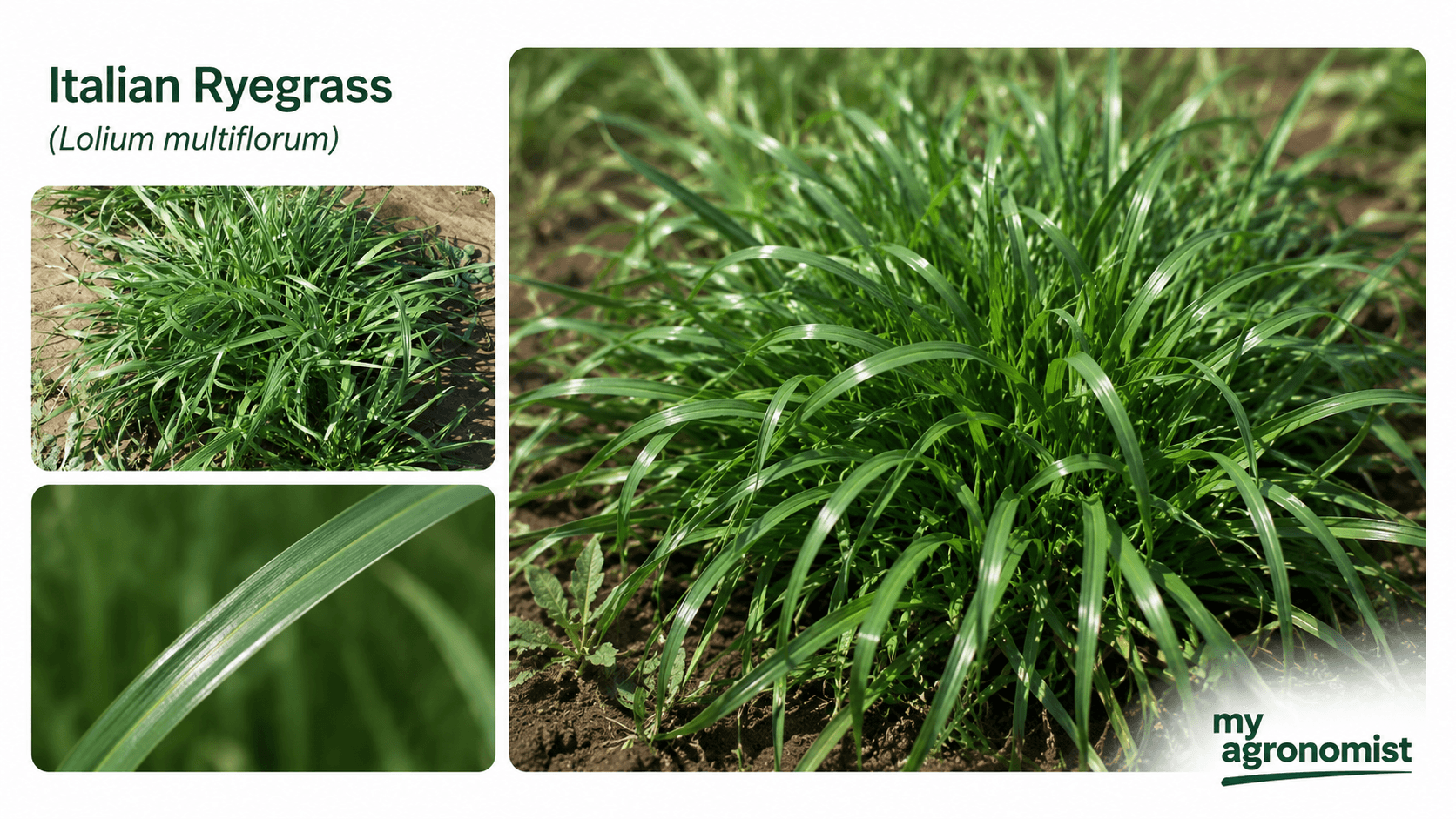
Agronomist summary
- Italian ryegrass is a competitive annual grassweed in arable crops.
- Untreated populations can reduce yield and quickly increase seed return.
- Autumn emergence dominates in many fields, with additional flushes possible through mild winters and spring.
- Look for vigorous grassweed growth, crop competition, patchy yield loss. Confirm in-field before making management decisions.
- Use integrated weed management: mapping, prevention, rotation, crop competition, seedbed strategy and resistance-aware herbicide planning where appropriate.
- High priority where symptoms or field history indicate active pressure; review before publishing.
Seasonality notes
Autumn emergence dominates in many fields, with additional flushes possible through mild winters and spring.
What is it?
Italian ryegrass is an annual grassweed that thrives in many UK rotations and can be difficult to suppress once established.
What does it look like?
Plants are bright green and vigorous with upright growth. In dense patches, ryegrass can overtop and shade crop rows.
Signs of damage / identification
- Rapidly thickening grassweed patches in autumn
- Suppressed crop growth in affected zones
- High seed return risk where control is incomplete
When is it active in the UK?
Emergence often starts in autumn and can continue in mild conditions. Reproductive growth is most visible in late spring.
Why it matters
Yield losses can be severe in heavily infested fields, and repeated pressure increases resistance risk.
How to manage or control it
Build programmes around prevention and integrated control: seedbed hygiene, rotation, drilling strategy and resistance-aware chemistry. Check current UK labels and stewardship before treatment.
Cultural/non-chemical options
Prioritise monitoring, prevention, field hygiene, crop competition, establishment quality and rotation choices before considering chemical inputs.
Professional crop protection options
Where professional crop protection is justified, use broad treatment categories only until a BASIS-qualified adviser or responsible reviewer has confirmed the crop, target, timing and current UK approval. Always check the current product label and approval status for crop, target, timing, dose, harvest interval and resistance guidance.
Crop-specific guidance
Use field history to prioritise pressure areas. In cereals, combine robust establishment with a planned herbicide sequence where appropriate.
Frequently asked questions
How is ryegrass different from blackgrass management?
Principles are similar, but local emergence pattern and resistance profile can differ, so programmes should be field-specific.
Does delayed drilling always help?
It can help in many situations but should be balanced with soil and seasonal risk for the crop.