
Weed • high risk
Blackgrass
Blackgrass is a highly competitive grassweed in UK arable systems, with herbicide resistance a major management challenge.
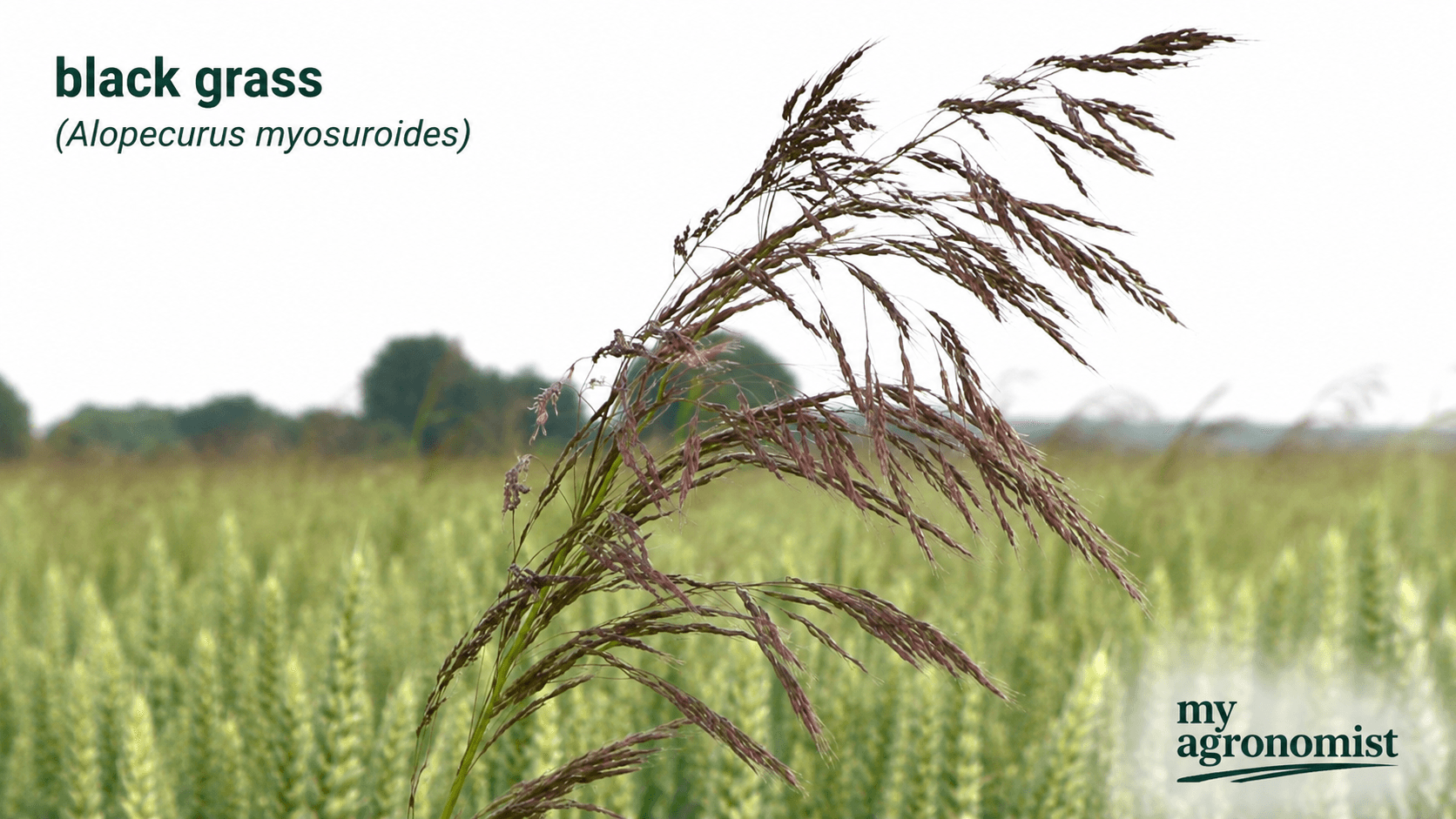
Agronomist summary
- Blackgrass is a competitive annual grassweed common in UK cereal rotations.
- It can drive major yield loss and worsen resistance pressure when unmanaged.
- Main emergence is autumn, but spring flushes can occur depending on weather and cultivation timing.
- Look for patchy crop suppression, dense grassweed heads, yield loss in patches. Confirm in-field before making management decisions.
- Use integrated weed management: mapping, prevention, rotation, crop competition, seedbed strategy and resistance-aware herbicide planning where appropriate.
- High priority where symptoms or field history indicate active pressure; review before publishing.
Seasonality notes
Main emergence is autumn, but spring flushes can occur depending on weather and cultivation timing.
What is it?
Blackgrass is an annual grassweed adapted to autumn drilling systems. It competes aggressively with cereals and is difficult to control in resistant populations.
What does it look like?
Plants are upright with narrow leaves and produce dark, dense seed heads at flowering. Infestations often appear as expanding field patches.
Signs of damage / identification
- Dense grassweed patches suppressing crop growth
- Uneven crop canopy and reduced tillering in hotspots
- High seed return where heads are left unchecked
When is it active in the UK?
Most emergence occurs in autumn through early winter, with seed head development in late spring and early summer.
Why it matters
Blackgrass can significantly reduce yield and profitability while resistance narrows chemistry options over time.
How to manage or control it
Prioritise integrated control: delayed drilling where viable, competitive crops, stale seedbeds, patch management and resistance-aware chemistry. Validate products and programmes against current UK labels.
Cultural/non-chemical options
Prioritise monitoring, prevention, field hygiene, crop competition, establishment quality and rotation choices before considering chemical inputs.
Professional crop protection options
Where professional crop protection is justified, use broad treatment categories only until a BASIS-qualified adviser or responsible reviewer has confirmed the crop, target, timing and current UK approval. Always check the current product label and approval status for crop, target, timing, dose, harvest interval and resistance guidance.
Crop-specific guidance
In winter cereals, robust pre-emergence programmes and cultural control are critical. Spring cropping can reduce pressure in difficult fields.
Frequently asked questions
Can herbicides alone solve blackgrass?
Usually not in resistant populations. Sustainable control depends on stacking cultural and chemical tactics.
Is patch mapping worthwhile?
Yes. Mapping supports targeted control and helps track whether strategy changes are reducing pressure.