
Disease • medium risk
Powdery mildew
Powdery mildew forms white powdery growth on leaves and stems, reducing crop efficiency where pressure is sustained.
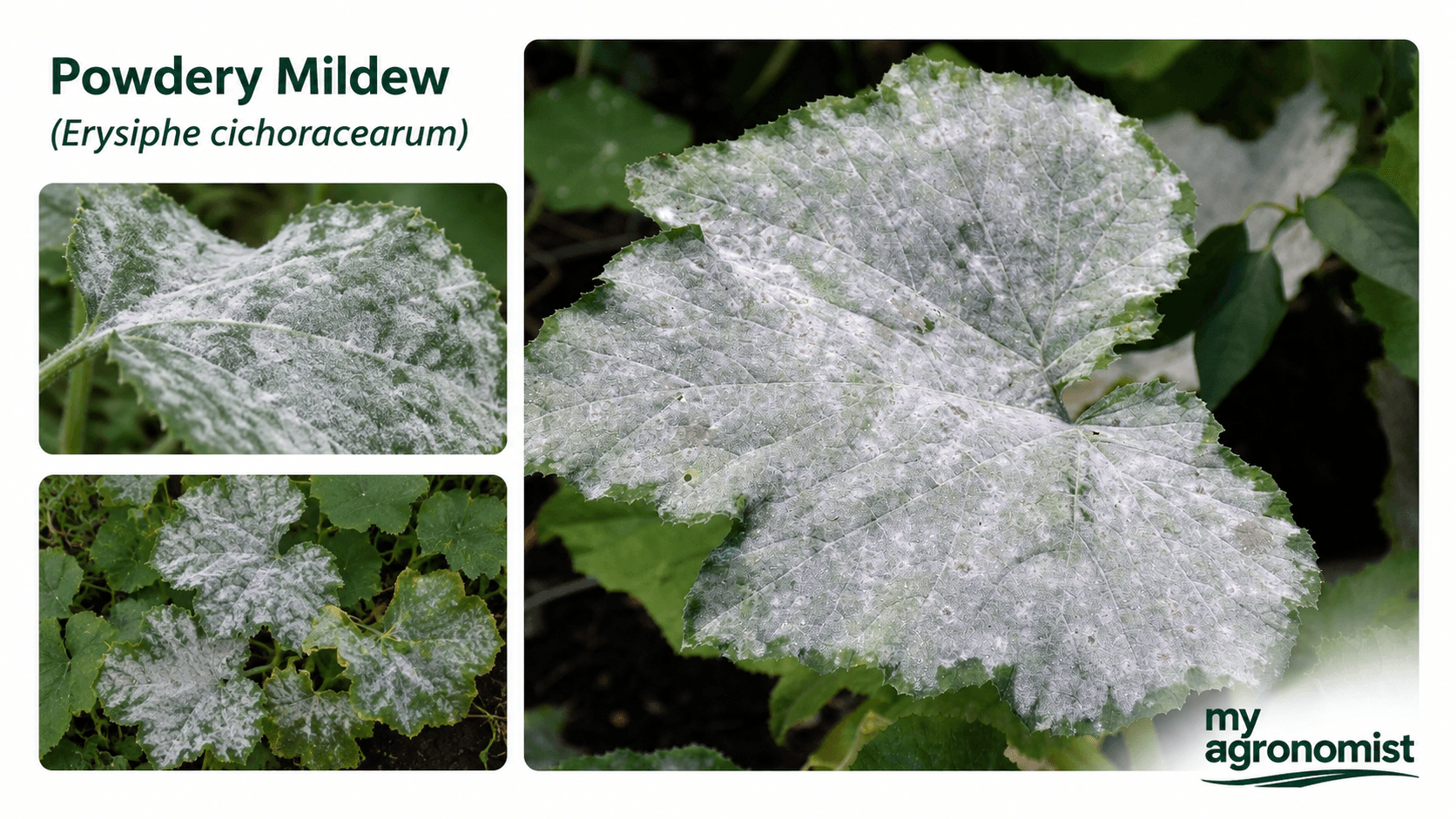
Agronomist summary
- Powdery mildew is a fungal disease producing white powdery growth on cereal foliage.
- Persistent infection reduces green leaf function and can reduce yield.
- Can build rapidly in mild conditions with dense canopies, especially where airflow is limited.
- Look for white powdery growth, chlorosis, leaf death in severe cases. Confirm in-field before making management decisions.
- Use integrated disease management: varietal resistance, canopy and weather-risk monitoring, crop walking and label-checked fungicide options where justified.
- Monitor regularly and prioritise higher-risk fields or susceptible varieties; review before publishing.
Seasonality notes
Can build rapidly in mild conditions with dense canopies, especially where airflow is limited.
What is it?
Powdery mildew is a foliar fungal disease that infects many cereals, often under mild conditions with dense crop canopies.
What does it look like?
White, powdery colonies appear on leaves and stems, later turning grey-brown as tissue ages or dies.
Signs of damage / identification
- White flour-like growth on leaf surfaces
- Localized patches that expand in dense canopy
- Reduced leaf efficiency where infection persists
When is it active in the UK?
Typically active through spring into early summer when conditions favour disease development.
Why it matters
Sustained infection reduces photosynthetic area and can trim yield potential in susceptible crops.
Pressure tool
Use this as an early warning input, then confirm in-field before treatment decisions.
Open the field tools dashboard for current disease pressure trends.
How to manage or control it
Use integrated disease management with varietal risk and canopy management. If fungicide input is needed, confirm current UK label, crop timing and resistance stewardship guidance.
Cultural/non-chemical options
Prioritise monitoring, prevention, field hygiene, crop competition, establishment quality and rotation choices before considering chemical inputs.
Professional crop protection options
Where professional crop protection is justified, use broad treatment categories only until a BASIS-qualified adviser or responsible reviewer has confirmed the crop, target, timing and current UK approval. Always check the current product label and approval status for crop, target, timing, dose, harvest interval and resistance guidance.
Crop-specific guidance
Mildew risk can be variety-specific. Monitor susceptible fields closely during active growth periods.
Frequently asked questions
Can mildew disappear on its own?
Pressure can decline as conditions change, but active infections may still affect crop performance if unchecked.
Is mildew mainly a barley problem?
It is common in barley but can also affect wheat and should be managed by crop and variety risk.