
Pest • high risk
Slugs
Slugs damage emerging seedlings and can thin crop populations rapidly in wet, mild conditions and high-residue fields.
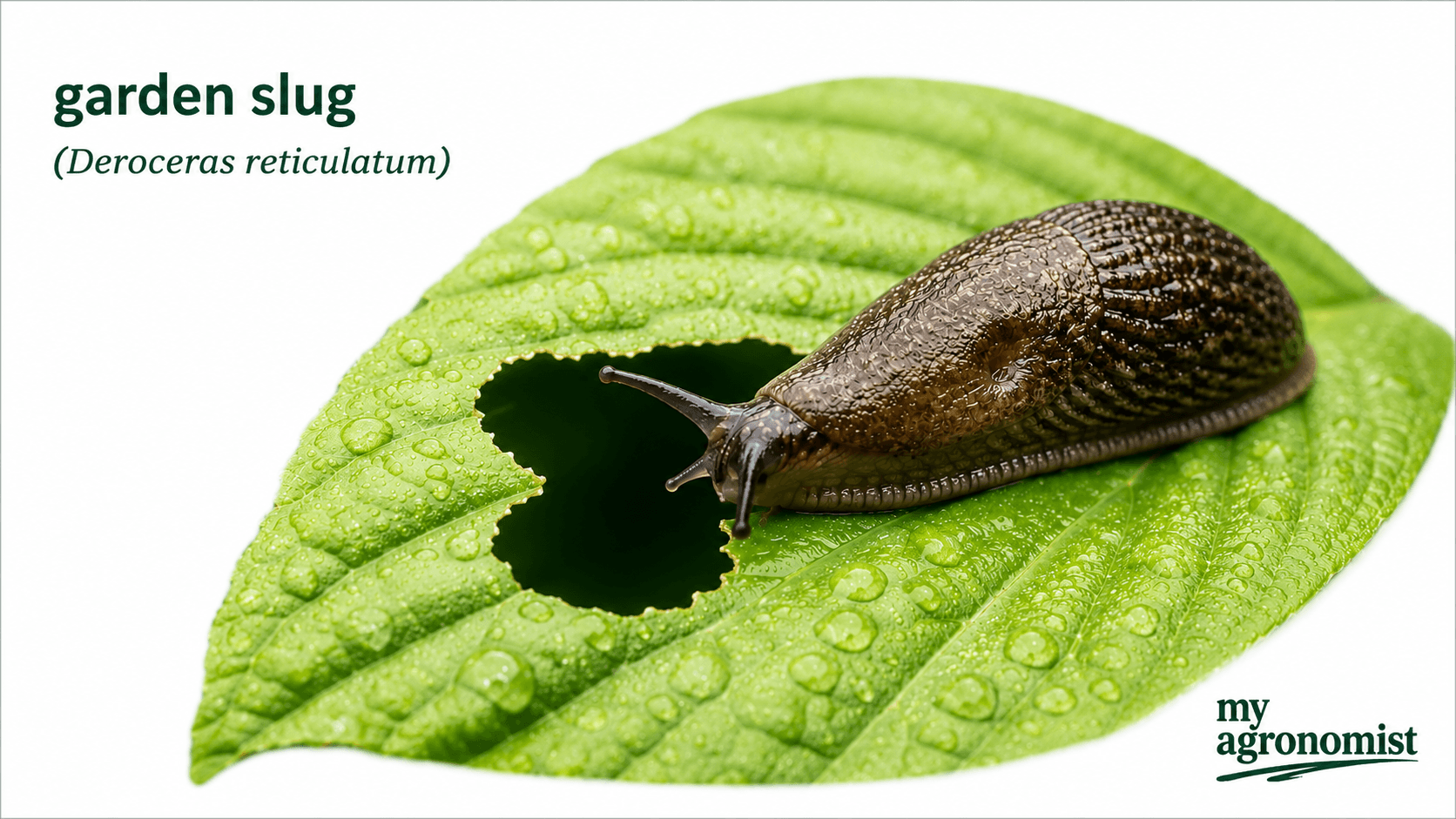
Agronomist summary
- Slugs are molluscs that feed on emerging crop tissue, especially in damp conditions.
- High pressure can cause patchy establishment or complete local crop loss.
- Pressure is typically highest during cool wet periods, especially at and after autumn drilling.
- Look for grazed cotyledons, ragged leaf feeding, missing plants, slime trails. Confirm in-field before making management decisions.
- Use integrated pest management: monitoring, risk assessment, cultural controls, beneficial insect awareness and label-checked treatment categories where justified.
- High priority where symptoms or field history indicate active pressure; review before publishing.
Seasonality notes
Pressure is typically highest during cool wet periods, especially at and after autumn drilling.
What is it?
Field slugs are soil-dwelling pests that feed on seedlings, leaves and stems, particularly where soils stay moist and residue is high.
What does it look like?
Damage often appears before slugs are seen directly. Look for irregular feeding, shredded cotyledons and fresh slime trails around vulnerable plants.
Signs of damage / identification
- Missing or heavily grazed seedlings after emergence
- Shredded cotyledons in oilseed rape
- Slime trails on soil surface and leaves
- Higher pressure in cloddy, trashy seedbeds
When is it active in the UK?
Risk is often highest in autumn and mild winters. Moisture drives activity, so local weather and seedbed condition strongly affect pressure.
Why it matters
Early plant loss can reduce plant population below target levels, forcing re-drilling or reducing final yield potential.
Pressure tool
Use this as an early warning input, then confirm in-field before treatment decisions.
Open the field tools dashboard to check current slug pressure signals.
How to manage or control it
Use an integrated approach: seedbed consolidation, residue management, drilling strategy, and field monitoring. If pellet use is justified, verify current UK approvals and stewardship limits before applying.
Cultural/non-chemical options
Prioritise monitoring, prevention, field hygiene, crop competition, establishment quality and rotation choices before considering chemical inputs.
Professional crop protection options
Where professional crop protection is justified, use broad treatment categories only until a BASIS-qualified adviser or responsible reviewer has confirmed the crop, target, timing and current UK approval. Always check the current product label and approval status for crop, target, timing, dose, harvest interval and resistance guidance.
Crop-specific guidance
Oilseed rape and early cereals are especially vulnerable at establishment. Prioritise high-risk fields and monitor after rainfall events.
Frequently asked questions
Are pellets the only control option?
No. Cultural controls are the foundation and often reduce reliance on pellets when timed well.
Can slug pressure vary within a field?
Yes. Headlands, heavy patches and high-residue zones are commonly worse and should be checked first.