
Disease • high risk
Septoria
Septoria tritici is a key wheat disease in the UK, driven by rainfall and canopy microclimate, and can cause major yield loss.
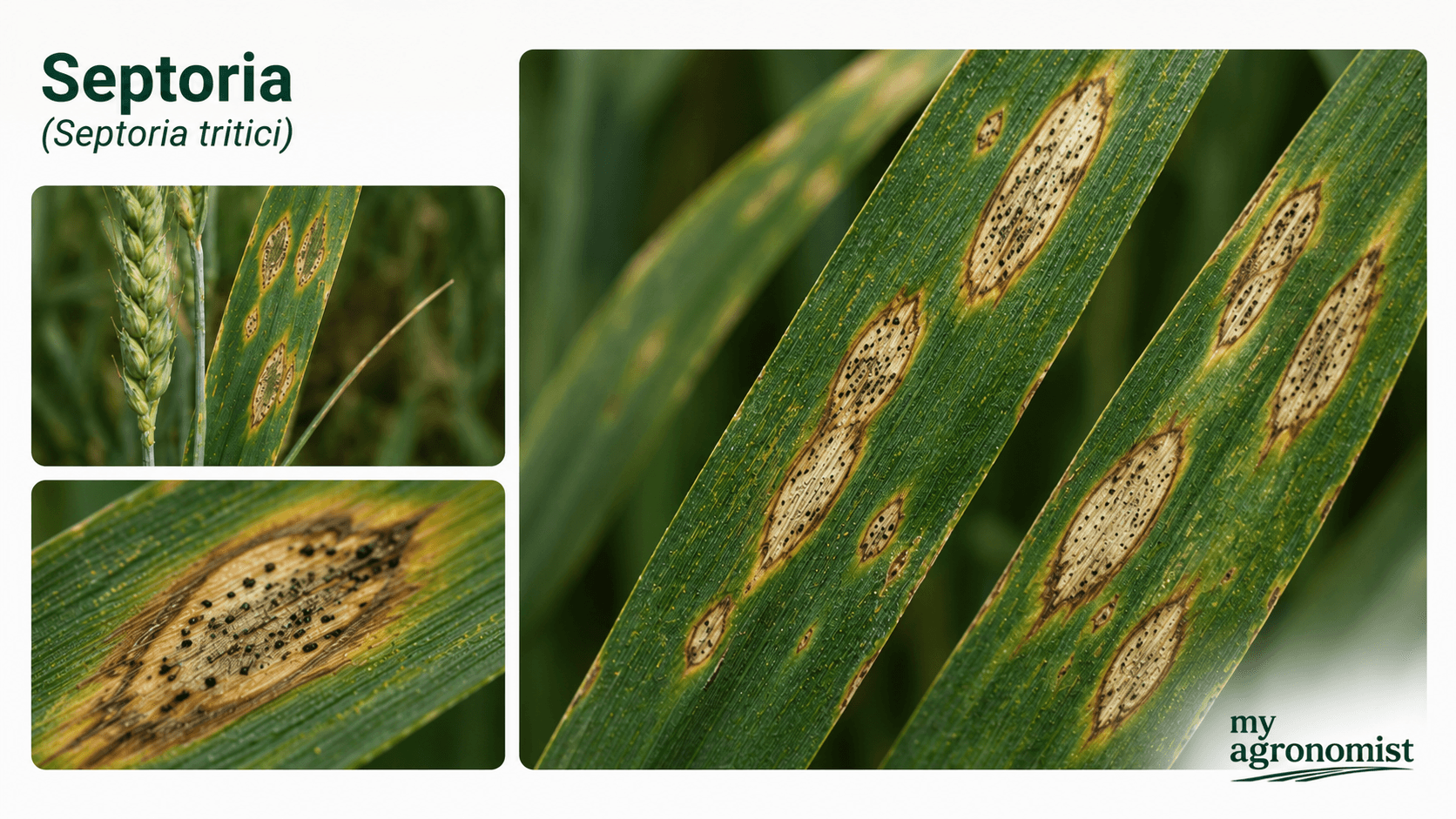
Agronomist summary
- Septoria is a fungal leaf disease of wheat spread mainly by rain splash.
- Uncontrolled disease can remove green leaf area and reduce grain fill.
- Wet periods and splash dispersal drive epidemics, with spring and early summer often most damaging.
- Look for leaf blotch, chlorotic lesions, pycnidia on leaves, premature leaf loss. Confirm in-field before making management decisions.
- Use integrated disease management: varietal resistance, canopy and weather-risk monitoring, crop walking and label-checked fungicide options where justified.
- High priority where symptoms or field history indicate active pressure; review before publishing.
Seasonality notes
Wet periods and splash dispersal drive epidemics, with spring and early summer often most damaging.
What is it?
Septoria tritici blotch is one of the most economically important foliar diseases in UK wheat production.
What does it look like?
Symptoms start as chlorotic flecks/lesions, progressing to irregular brown blotches with dark pycnidia under moist conditions.
Signs of damage / identification
- Lower leaf infection moving up canopy over time
- Blotchy lesions with dark specks (pycnidia)
- Rapid disease escalation after rain events
When is it active in the UK?
Disease can cycle through much of the season, but damaging canopy spread commonly accelerates in wet spring conditions.
Why it matters
Loss of upper green leaf area during grain fill can significantly reduce yield and quality.
Pressure tool
Use this as an early warning input, then confirm in-field before treatment decisions.
Open the field tools dashboard for current disease pressure trends.
How to manage or control it
Use integrated disease management: varietal choice, canopy planning and timely fungicide programmes where justified. Always verify product labels, timing windows and resistance stewardship in current UK guidance.
Cultural/non-chemical options
Prioritise monitoring, prevention, field hygiene, crop competition, establishment quality and rotation choices before considering chemical inputs.
Professional crop protection options
Where professional crop protection is justified, use broad treatment categories only until a BASIS-qualified adviser or responsible reviewer has confirmed the crop, target, timing and current UK approval. Always check the current product label and approval status for crop, target, timing, dose, harvest interval and resistance guidance.
Crop-specific guidance
Wheat programmes should be growth-stage aware and responsive to local weather and varietal susceptibility.
Frequently asked questions
Does dry weather stop septoria?
Dry periods slow spread, but latent infection can remain and re-activate when wet conditions return.
Is one spray enough in high pressure years?
Often not. Strategy should be adapted to disease pressure, variety and season progression.