
Pest • high risk
Flea beetle
Flea beetles can cause rapid feeding damage to young brassica crops, with cabbage stem flea beetle a major UK oilseed rape concern.
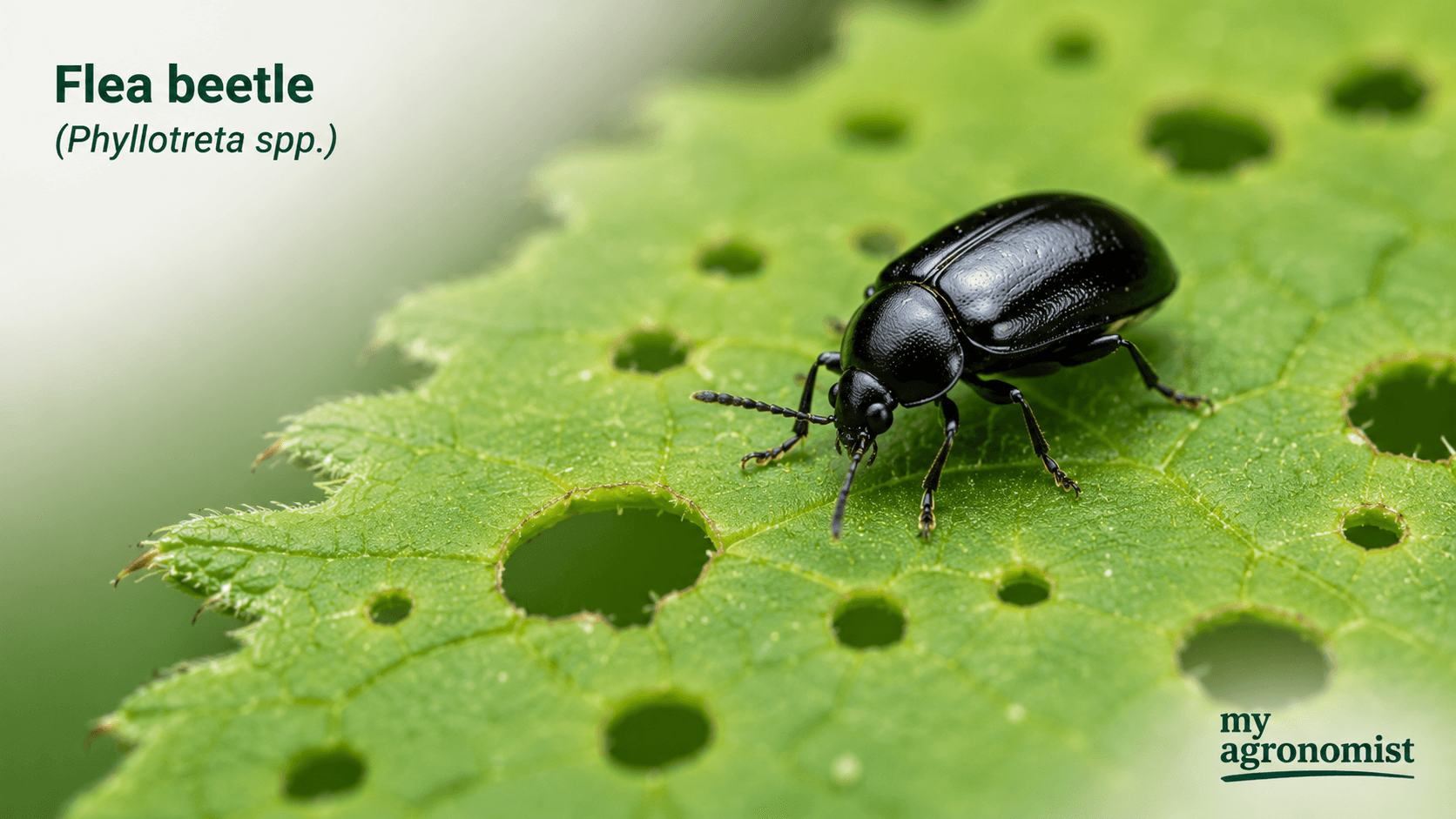
Agronomist summary
- Flea beetles are small jumping beetles that feed on brassica leaves; larvae can also damage stems.
- Heavy early feeding can reduce establishment and plant survival in oilseed rape.
- Adult migration pressure is often highest around crop establishment in late summer and autumn.
- Look for shot-holing, cotyledon feeding, stunted seedlings, larval stem damage. Confirm in-field before making management decisions.
- Use integrated pest management: monitoring, risk assessment, cultural controls, beneficial insect awareness and label-checked treatment categories where justified.
- High priority where symptoms or field history indicate active pressure; review before publishing.
Seasonality notes
Adult migration pressure is often highest around crop establishment in late summer and autumn.
What is it?
Flea beetle refers to several beetle species; cabbage stem flea beetle is the key concern in many UK oilseed rape systems.
What does it look like?
Adults are small, dark, shiny beetles that jump when disturbed. Feeding often creates characteristic shot-hole leaf damage.
Signs of damage / identification
- Shot-holing on cotyledons and early true leaves
- Rapid thinning in vulnerable seedling crops
- Larval damage signs in petioles or stems later in season
When is it active in the UK?
Adult pressure often peaks around crop establishment in late summer and autumn, with larval effects carrying into winter/spring.
Why it matters
Severe pressure can compromise crop establishment and final plant stand, directly affecting yield potential.
How to manage or control it
Prioritise integrated measures: drilling timing, seedbed quality, moisture capture and close monitoring. If treatment is considered, confirm legal and effective options on the current UK label before use.
Cultural/non-chemical options
Prioritise monitoring, prevention, field hygiene, crop competition, establishment quality and rotation choices before considering chemical inputs.
Professional crop protection options
Where professional crop protection is justified, use broad treatment categories only until a BASIS-qualified adviser or responsible reviewer has confirmed the crop, target, timing and current UK approval. Always check the current product label and approval status for crop, target, timing, dose, harvest interval and resistance guidance.
Crop-specific guidance
Oilseed rape is highest risk at emergence. Manage for rapid establishment and monitor repeatedly during migration windows.
Frequently asked questions
Can crop vigour reduce flea beetle impact?
Yes. Faster-growing crops can tolerate low-to-moderate feeding better than slow or stressed crops.
Should all feeding trigger treatment?
No. Decisions should be based on pressure, crop stage, growth potential and current approved options.