Best Fungicide for Plants: How to Choose the Right Fungicide Spray
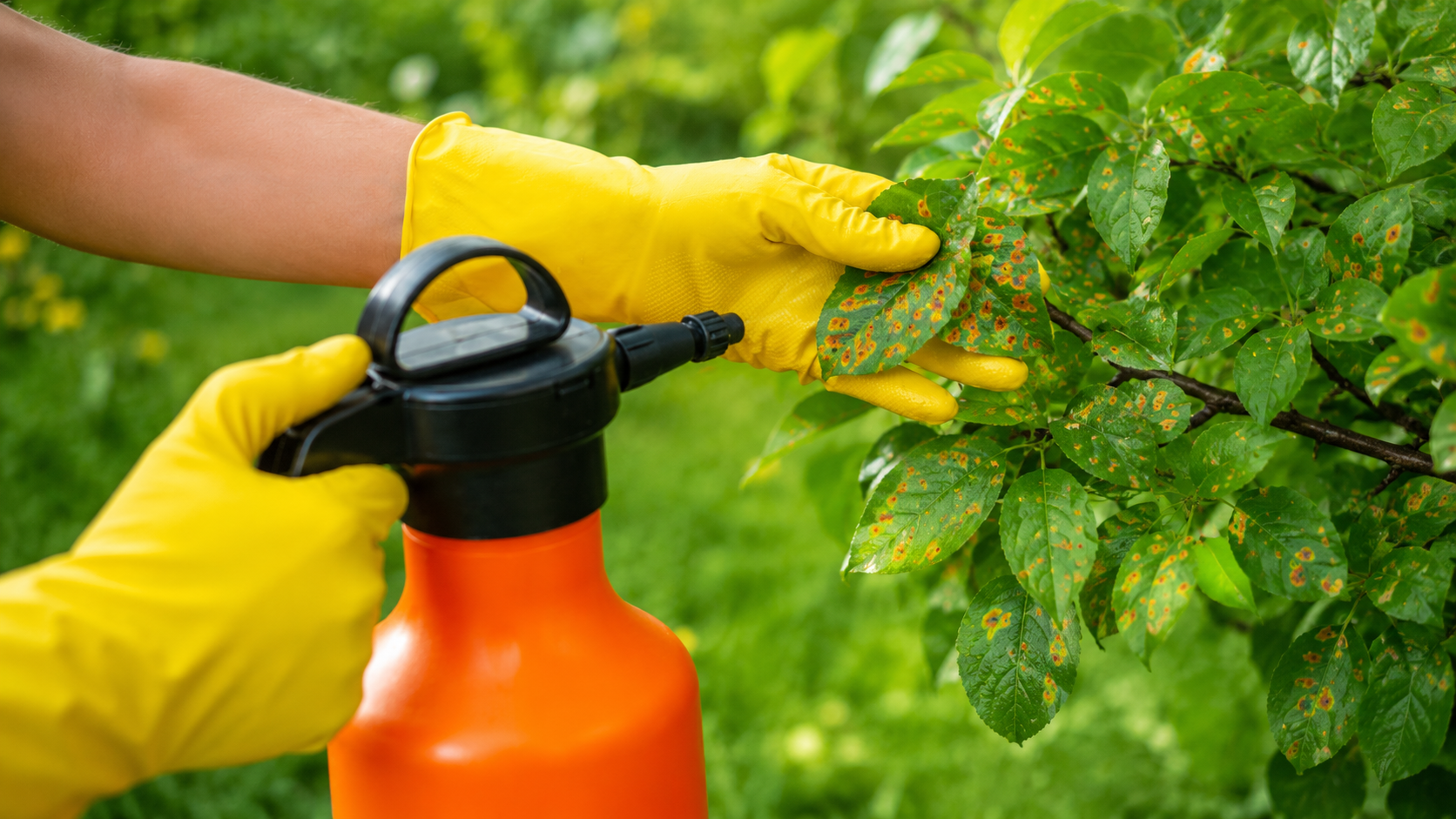
Practical Fungicide Decision Framework
Use this simple process before choosing a fungicide.
| Step | Question | What to do |
|---|---|---|
| 1 | What crop or plant is affected? | Identify the crop, plant species and growth stage before choosing any product. |
| 2 | What disease is present or likely? | Confirm whether the issue is rust, mildew, blight, downy mildew, leaf spot, Botrytis or another disease. |
| 3 | Is it a true fungus or an oomycete? | Late blight and many downy mildews are caused by oomycetes and often need different chemistry from true fungal diseases. |
| 4 | Is disease pressure high enough to justify treatment? | Consider weather, crop stage, previous disease history and local disease warnings. |
| 5 | Is the disease absent, early or well established? | Fungicides usually work best preventively or at the earliest stage of disease development. |
| 6 | Is the product labelled for the crop and disease? | Check the product label and current authorisation before use. |
| 7 | What mode of action is being used? | Check the FRAC group and avoid repeated use of the same mode of action. |
| 8 | Is the sprayer set up correctly? | Match water volume, nozzle choice, speed and coverage to the crop canopy. |
| 9 | What happens after spraying? | Monitor disease, new growth and weather, then continue, rotate or stop based on risk and label rules. |
A good fungicide decision is not just about choosing a product. It is about diagnosis, timing, coverage, resistance management and legal use.
Common Mistakes When Using Fungicide Spray
Even good products can perform badly when used incorrectly.
Common mistakes include:
- spraying before identifying the disease
- treating an oomycete disease like a true fungal disease
- applying fungicide too late
- using poor water volume for the canopy
- relying on copper as a universal solution
- repeating the same mode of action too often
- reducing dose below an effective level
- stretching spray intervals too far
- ignoring label restrictions
- failing to combine fungicides with cultural controls
Avoiding these mistakes can improve disease control and reduce resistance pressure.
FAQ
What is the best fungicide for plants?
The best fungicide for plants is the one that matches the crop, the diagnosed disease, the growth stage, the product label and the local resistance risk. There is no single best fungicide for every plant disease.
When should I use fungicide spray?
Most fungicide sprays work best before infection or when disease is only just starting. Waiting until a plant or crop is heavily infected usually gives poorer control.
Is copper fungicide a good choice?
Copper fungicide can be a useful preventive contact fungicide, especially in some fruit, vine, vegetable and organic systems. However, it is not suitable for every crop or disease, and repeated use needs environmental stewardship.
Is copper fungicide safe for all plants?
No. Copper fungicide can damage sensitive plants or young growth if used incorrectly. Always check the product label and crop suitability before use.
Is a systemic fungicide better than a contact fungicide?
Not always. Systemic fungicides can move within plant tissue, but contact fungicides can be very useful as preventive protectants. The better option depends on the disease, crop, timing and resistance strategy.
Can fungicide cure infected plants?
Fungicides are usually best at preventing infection or stopping very early disease development. They rarely reverse damage that is already visible and well established.
How often should I spray fungicide?
Spray intervals depend on the product label, disease pressure, weather and crop growth. Wet, high-risk conditions often require shorter intervals, but label directions must always take priority.
Can one fungicide control late blight, powdery mildew and every other disease?
Usually not. Late blight and many downy mildews are caused by oomycetes, which often require different active ingredients from those used on true fungal diseases such as rusts or powdery mildew.
What is the difference between fungicide and pesticide?
A fungicide is a type of pesticide used to manage fungal or fungal-like plant diseases. Other pesticide types include herbicides for weeds, insecticides for insects and molluscicides for slugs and snails.
Should gardeners use the same fungicides as farmers?
Not necessarily. Professional agricultural products may not be approved or suitable for home garden use. Gardeners should only use products labelled for garden plants and should follow the label carefully.
Final Thoughts
The best fungicide is not simply the strongest product. It is the product that fits the crop, the disease, the timing, the label and the resistance-management strategy.
For MyAgronomist users, the practical approach is to start with diagnosis, then think through spray timing, water volume, mode of action and programme cost. Fungicides are most effective when they are used early, accurately and as part of a wider integrated disease-management plan.
Use MyAgronomist tools and product intelligence to compare options, check spray logistics, review programme costs and make better-informed crop protection decisions.