
Disease • medium risk
Brown rust
Brown rust affects wheat and barley and often rises in warmer conditions, reducing green area and grain-fill performance.
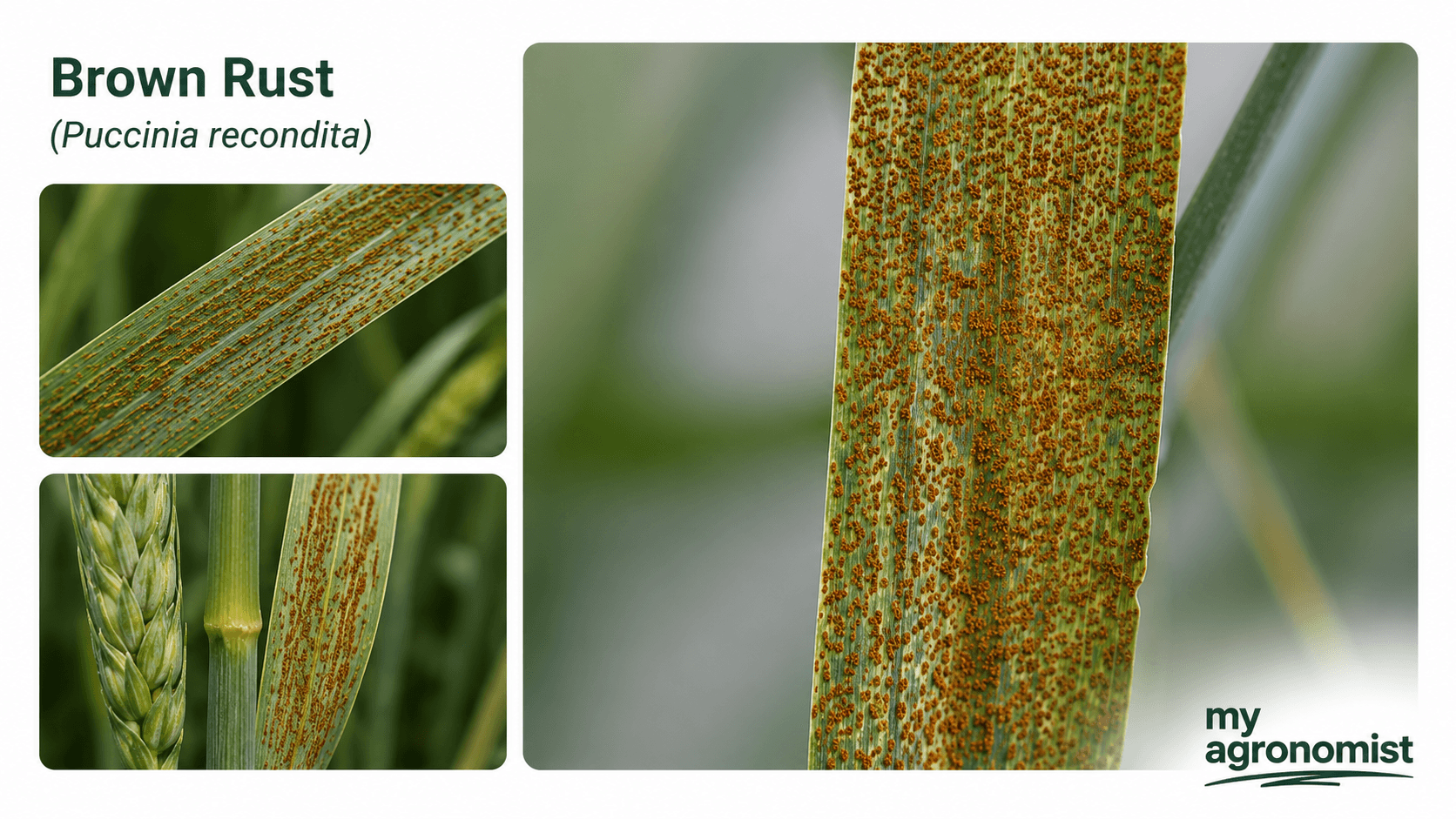
Agronomist summary
- Brown rust is a cereal foliar disease causing orange-brown pustules on leaves.
- Late-season leaf damage can still reduce grain fill and quality.
- Pressure often increases later than yellow rust and is favoured by warmer conditions.
- Look for brown pustules, leaf senescence, patchy canopy infection. Confirm in-field before making management decisions.
- Use integrated disease management: varietal resistance, canopy and weather-risk monitoring, crop walking and label-checked fungicide options where justified.
- Monitor regularly and prioritise higher-risk fields or susceptible varieties; review before publishing.
Seasonality notes
Pressure often increases later than yellow rust and is favoured by warmer conditions.
What is it?
Brown rust is caused by Puccinia species and affects both wheat and barley depending on pathogen and season.
What does it look like?
Small orange-brown pustules develop on leaf surfaces and can spread across the canopy in suitable conditions.
Signs of damage / identification
- Powdery orange-brown pustules on upper leaves
- Increased leaf senescence in affected areas
- Pressure rising in warm spells
When is it active in the UK?
Often a later-season disease than yellow rust, with highest risk in warm conditions.
Why it matters
When upper leaves are affected during grain fill, yield and quality penalties can follow.
Pressure tool
Use this as an early warning input, then confirm in-field before treatment decisions.
Open the field tools dashboard for current disease pressure trends.
How to manage or control it
Use integrated planning with varietal resistance and scouting. Where fungicide is justified, confirm current UK label and resistance-positioning guidance before spraying.
Cultural/non-chemical options
Prioritise monitoring, prevention, field hygiene, crop competition, establishment quality and rotation choices before considering chemical inputs.
Professional crop protection options
Where professional crop protection is justified, use broad treatment categories only until a BASIS-qualified adviser or responsible reviewer has confirmed the crop, target, timing and current UK approval. Always check the current product label and approval status for crop, target, timing, dose, harvest interval and resistance guidance.
Crop-specific guidance
Monitor susceptible wheat and barley blocks through late spring and summer, especially when temperatures rise.
Frequently asked questions
Is brown rust always less important than yellow rust?
Not always. In warm conducive seasons, brown rust can become highly damaging in susceptible crops.
Can it appear quickly near grain fill?
Yes. Late increases are possible and should be monitored where crops remain vulnerable.